Clinical services staff collaborate with community partners and healthcare providers to increase access to services for residents. The Clinical Services and Communicable Disease Control division also conduct surveillance for communicable disease control, promote chronic disease prevention, and respond rapidly to disease outbreaks and health emergencies.
Residents
Many free or low-cost services are available to residents through the Clinical Services and Communicable Disease Control division, as well as referrals to appropriate community resources. Public health nurses are also available to provide information on health-related issues.
Covid-19
The ongoing COVID-19 pandemic continues to evolve as variants develop and new information about the virus is discovered by state, federal and global scientists. Protect yourself and your loved ones by staying informed on local disease trends and taking the recommended precautions.
The health department utilizes disease surveillance and investigation to prevent the spread of communicable diseases in the community. The Nursing division collaborates with health care providers, schools, and the community to minimize illness, hospitalization, and death from communicable diseases through public outreach, education, and vaccinations.
Communicable diseases are illnesses that can be transmitted from person to person or animal to person. People spread communicable diseases to others in a variety of ways:
Contact with contaminated body fluids. For example, a common way respiratory illnesses like whooping cough (Pertussis) are transmitted is through contact with contaminated body fluids.
Eating contaminated foods or beverages. Foodborne illnesses like salmonella are often spread by eating contaminated foods.
With any communicable disease, it is important to understand how the illness is transmitted and use appropriate preventative measures, such as handwashing and covering your cough.
If you suspect a foodborne illness, please contact a healthcare provider.
Flu
Flu season generally begins in October and ends the following year at the end of May. Putnam County Department of Health offers seasonal influenza vaccine clinics for residents of Putnam County. There are currently no clinics scheduled.
The health department also offers free influenza vaccine to all Putnam County school-age children in our school-based flu clinics. Partnering with the Board of Education, school administration, school nurses, and Parent/Teacher Organizations (PTO), the Nursing division provides an annual school-based influenza vaccination program. Please check with your school district for scheduling and forms at the beginning of the school year.
Hepatitis C Testing
Hepatitis C screening and diagnosis at the health department is currently on hold. Please check back for updates.
The Department of Health provides childhood, adult, and travel immunizations through regularly scheduled vaccine clinics. For information about the vaccines offered through these clinics, please visit the Immunizations page.
Info for Parents & Caregivers
Trusted resources for parents and caregivers of newborns can be foundhere. These resources were curated by the Nursing division’s Maternal Child Health program staff.
A newMoms Group is being hosted by PCDOH nurses at the Mahopac Library on Wednesdays from 1:30 pm to 3:30 pm.
A Breastfeeding Support Group located at Hudson Valley Hospital Center is open to Putnam County residents. The group is led by Certified Lactation Consultants. Registration is required by calling 914-734-3257.
A New Parent Support Group is available online through the Desmond-Fish Library. More information can be found on theirwebsite.
The Child Find Program is also available to families with infants who would benefit from additional screening and monitoring. Child Find is a statewide program which offers regular screening tests to children at risk for delay in growth and development. The program also provides referrals to other programs and diagnostic services in the community for children birth to 3 years who may have special needs. For more information about the program, please view theChild Find Flyer.
This email address is being protected from spambots. You need JavaScript enabled to view it.
The Putnam County Bureau of Emergency Services is dedicated to provide prompt and efficient emergency assistance to residents and visitors of Putnam County.
The Bureau maintains a county-wide communications organization and is responsible for the operations & maintenance of the Enhanced 911 system. The Bureau Emergency Management directorate plans for response, remediation / mitigation and recovery from natural and manmade disasters including those resulting from biological, nuclear, incendiary, chemical and explosive causes.
The Putnam County Department of Health is made of several divisions all working towards improving and protecting the health of the entire community, through the lens of equity.
The Putnam County Department of Health sponsors three free rabies vaccinations clinics each year for cats, dogs and ferrets of Putnam County residents. Ensuring pets are current on their vaccination makes them safe and also keeps their family and community safe. Clinics are held each March, July and November.
Capture The Bat
Rabies will result in death if it is left untreated in humans and domestic pet mammals. If a county resident (or visitor) has a potential rabies exposure, trained rabies program staff makes a decision regarding treatment. Nurses work with area health care providers and the exposed individuals to ensure accurate and timely completion of Rabies Post-Exposure Prophylaxis.
Nurses and environmental staff work with the local hospital and area health care providers to follow county residents through their Rabies prophylaxis regimen and completion of this protocol, in addition to providing educational presentations to the community as needed.
To report a possible rabies exposure in a person or pet, please complete the form below and fax it to 845-278-7921. Animal bite reports can also be emailed toThis email address is being protected from spambots. You need JavaScript enabled to view it.. All animal bites suspected of transmitting rabies are required to be reported to the health department within 24 hours by calling 845-808-1390. If calling after hours, holidays or weekends, dial 845-808-1390 and press 3.
Veterinarians requesting testing due to a bite or symptomatic animal, or who are looking for assistance with rabies titer testing for staff, should call 845-808-1390.
Healthcare providers looking to discuss rabies treatment or prophylaxis for a patient should call 845-808-1390.
For current ACIP recommendations for rabies vaccine, click here.
The Putnam County Department of Health partnered with Putnam AdvoCats, Inc. to create a Feral Cat Taskforce which involves the trapping, neutering, vaccinating and release of feral cats in the area. This is an attempt to address a growing health concern in the county. Feral cats are cats that do not have owners and may be strays and account for a significant number of required rabies treatments. The Trap-Neuter-Return (TNR) concept is a humane and effective approach used for decades in the US after being proven in
Europe. Scientific studies show that this practice improves the lives of feral cats, improves their relationships with the people who live near them, and decreases the size of colonies over time. Working with volunteers from Putnam AdvoCats, Inc., and area veterinarians, the ultimate goal is to decrease the population of feral cats in our community over time and thereby reducing the risk of rabies. For help with feral cats or to report a feral cat colony, please call the health department at 845-808-1390.
Rabies F.A.Q.s
What should I do if I get bitten by a wild animal?
Immediately wash the wound with lots of soap and running water.
Capture the animal, if possible, so it can be tested. Take care to prevent additional bites or damage to the animal’s head.
Call the Putnam County Health Department as soon as possible at (845) 808-1390. If it is outside of normal business hours please dial (845) 808-1390 ext. 3. An employee will call you back.
SEEK MEDICAL ADVICE PROMPTLY. It is best to contact the Health Department first, but you may call your own doctor for advice.
If necessary, a dead animal may be kept on ice, double bagged in plastic, until it can be tested. The Putnam County Health Department will arrange for testing. Always wear gloves, use a shovel and clean the area and tools with one part bleach to 10 parts water. Keep the dead animal in a protected area away from people and other animals.
What should I do if I get bitten by a pet cat or dog?
Immediately wash the wound with lots of soap and running water.
Obtain the pet owner’s name, address, and telephone number. Find out if the animal has a current rabies vaccination, write down the rabies tag number and obtain Veterinarian information.
Call the Putnam County Health Department as soon as possible at (845) 808-1390. If it is outside of normal business hours please dial (845) 808-1390 ext. 3. An employee will call you back.
SEEK MEDICAL ADVICE PROMPTLY. It is best to contact the Health Department first, but you may call your own doctor for advice.
What should I provide when reporting an incident?
Type and description of animal including any features or marks;
If it was a pet, whether it wore a collar or tags and where it lives;
How the bite occurred;
Whether the animal has been seen in the area before and what direction it was traveling
What should I do when I see a wild animal?
Stay away and keep your children away.
Keep pets indoors.
Let the animal go away on its own.
You may call a nuisance wildlife control officer who will remove the animal for a fee.
What should I do if a wild animal is threatening people or pets?
Call the local police or during business hours call the Putnam County Health Department at (845) 808-1390.
What should I do if my pet is exposed to an animal that might be rabid?
If your pet has been in a fight with another animal, wear gloves to handle it. Isolate it from other animals and people for several hours. Call your veterinarian. Your vaccinated pet will need a booster dose of Rabies vaccine within five days of the exposure. Unvaccinated animals exposed to a known or suspected rabid animal must be confined for six months or humanely destroyed.
Wear gloves to handle your pet. Saliva from the rabid animal may be on your pet’s fur. Do not touch your face after handling the pet unless you have removed gloves and thoroughly washed your hands.
Isolate your pet from other animals and people for several hours.
Call the Putnam County Health Department for advice.
Call your veterinarian. Vaccinated pets will need a rabies booster shot within five days of the attack.
An unvaccinated pet must be quarantined for six months or humanely destroyed.
What can I do to protect myself against rabies?
Do not feed, touch or adopt wild or stray animals.
Vaccinate your pets: Be sure your dogs and cats are up-to-date on their Rabies vaccinations. Vaccinated pets serve as a buffer between rabid wildlife and man. Protect them, and you may reduce your risk of exposure to Rabies. Vaccines for dogs and cats after three months of age are effective for a one-year period. Re-vaccinations are effective for up to three years. Pets too young to be vaccinated should be kept indoors.
Keep family pets indoors at night. Feed pets indoors and never leave them out doors unattended. Don’t leave them outside unattended or let them roam free.
Don’t attract wild animals to your home or yard. Keep your property free of stored bird seed or other foods which may attract wild animals. Feed pets indoors. Tightly cap or put away garbage cans. Board up any openings to your attic, basement, porch or garage. Cap your chimney with screens.
Tell children not to touch any animal they do not know. Encourage children to immediately tell an adult if they are bitten by any animal.
Report all animal bites or contact with wild animals to the Punam County Department of Health.
If a wild animal is on your property, let it wander away. Bring children and pets indoors and alert neighbors who are outside. You may contact a nuisance wildlife control officer who will remove the animal for a fee.
Keep a pair of work gloves in hand in case your pet is attacked.
Where can I learn more?
Each County health authority in New York State has a plan to respond to Rabies. Contact the health department at 845-808-1390 for details regarding human treatment and animal submission/shipment for testing. After hours, please call (845) 808-1390 ext. 3.
What if I find a bat in my house?
Four percent of bats test positive for Rabies. If there is any chance that the bat had contact with a person or pet, however, the bat should be captured and tested for rabies. If you find a bat in your house, call the Putnam County Health Department at (845) 808-1390.
If there was any chance that contact with a person or pet occurred, or you are not sure if contact occurred, DO NOT release the bat. Call the Putnam County Department of Health to arrange for the bat to be tested for rabies.
Turn on room lights and close the windows.
Close the room and closet doors.
Wait for the bat to land.
Wearing gloves, place a coffee can, pail, or similar container over the bat.
Slide a piece of cardboard under the container to trap the bat.
Firmly hold the cardboard in place against the top of the container, turn it right side up and tape the cardboard tightly to the container.
Pet Owner F.A.Q.s
What pet owners need to know about Rabies vaccination requirements
State law requires rabies vaccinations (shots) for all cats, dogs and domesticated ferrets.
Effective November 20, 2002, this information must be provided by pet dealers to consumers upon point of sale of cats, dogs, and ferrets.
Fines
If your dog, cat or domesticated ferret is not vaccinated, is not up-to-date on its vaccinations, or is not properly confined after biting someone, as the owner you will be subject to a fine not to exceed $200 for each offense.
Exemptions
The vaccination requirements shall not apply to any dog, cat, domesticated ferret if the animal is transported through New York state and remains in the state 15 days or less; the animal is confined to the premises of an incorporated society devoted to the care of lost, stray or homeless animals; a licensed veterinarian has determined that the vaccination will adversely affect the animal’s health; the animal is confined to the premises of a college or other educational or research institution for research purposes; or if the animal is un-owned (feral, wild, not socialized).
When should my pet receive its first Rabies vaccination?
The law requires that your pet’s first rabies vaccination be given no later than four months after its date of birth. Many rabies vaccines are licensed for use at three months, although some may be given at younger ages.
When should my pet receive its second Rabies vaccination?
Your pet should receive its second rabies vaccination within one year after the first vaccination. The second rabies shot and all shots thereafter are sometimes called booster shots.
When is the booster shot due?
After the second rabies shot, your pet only needs to get additional booster shots every three years, as long as the vaccination clinic or your veterinarian is using a rabies vaccine licensed for three years.
What proof will I have that my pet received its rabies shots?
The veterinarian, or a person under the veterinarian’s supervision, will provide you with a certificate as proof that your pet has been vaccinated. The veterinarian’s office will also keep a copy of your pet’s vaccination certificate. The law requires the veterinarian to provide the vaccination certificate to any public health official for any case involving your dog, cat or ferret that may have been exposed to rabies, or in any case of possible exposure of a person or another animal to rabies.
What if my pet needs to be taken to the veterinarian?
Whenever you bring your pet to a veterinarian, they will verify if the animal is up-to-date on its rabies shots. If the animal is not up-to-date on its rabies shots or is exempt due to a medical condition, or if the veterinarian cannot find proof of the animal’s rabies vaccination history, you may request your pet be vaccinated at that time.
If my pet bites a person, does it have to be euthanized?
If your pet bites a person and you wish to avoid euthanizing and testing it for rabies, it must be confined and observed for ten days. During the ten-day confinement period, the county or a designated party must verify that your pet is under confinement and observation, and has remained healthy during and at the end of the ten-day period.
Contact Us
Phone
845-808-1390
Fax
845-278-7921
Fax (Nursing)
845-447-9490
Toll free (TTY) for the Deaf, Hard of Hearing, and Speech Impaired
Complaints on facilities will not be addressed through email. To file a complaint, please call the Department of Health directly at 1-845-808-1390.
Animal bite reports should be emailed to This email address is being protected from spambots. You need JavaScript enabled to view it.
In the event of an emergency, Health Department staff are available 24/7. Please call 845-808-1390 to report a public health emergency, rabies exposure, communicable disease, water outage or sewer overflow.
If you are a member of the media and would like to contact the health department, please email This email address is being protected from spambots. You need JavaScript enabled to view it..
The Putnam County Department of Health is made of several divisions all working towards improving and protecting the health of the entire community, through the lens of equity.
Early Intervention Services are provided to help eligible children grow and develop, and to help families support and promote their children’s development. This program is a family teach model. The Putnam County Early Intervention Program (EIP) is part of the national Early Intervention Program for specific children birth to three and their families.
For Parents
Should I refer my child?
To be eligible for services, children must be under 3 years of age and have a confirmed disability or established developmental delay, as defined by NYS guidelines, in one or more of the following areas of development: physical, cognitive, communication, social-emotional and adaptive.
The New York State publication,Early Help Makes a Difference, provides a reference for the different stages of development to help determine if an infant or toddler may not be growing and developing. If a child is not meeting milestones, start a conversation with their pediatrician to determine next steps. For information about the Early Intervention Program in New York State, pleaseclick here.
The Putnam County Department of Health works in partnership with the New York State Department of Education and its regional staff by offering guidance and clarification to the Committees on Preschool Special Education (CPSE) and service providers regarding regulations. The Preschool Program serves preschoolers ages three to five residing in Putnam County who have been found eligible to receive special education services through their school district’s Committee on Preschool Special Education. In addition to acting as a fiscal agent, the health department serves as a resource for parents, school districts, and professionals to help them participate as full partners in the process. Special education services and programs may consist of instruction and/or services which may include Speech Therapy, Physical Therapy, Occupational Therapy, Special Education, Special Class, Special Class in an Integrated Setting, Nursing, and Counseling Services.
For Parents
Eligibility
Eligibility is determined in accordance with the New York State Department of Education standards. To have a child assessed by NYS-approved evaluators, contact your school district. These evaluations are provided at no cost to the family.
To contact the health department for questions, please call 845-808-1640.
Approved Providers
Click here for a list of approved preschool providers
CPSE Program Contact Information
Click here for school district CPSE contact information.
The mission of the Putnam County Local Early Intervention Coordinating Council (LEICC) is to provide a forum for all Early Intervention Program partners, parents, guardians, providers, and Putnam County staff to collaborate in identifying, evaluating, developing, and implementing services that empower families and allow children to prosper, grow, and fully participate in society. The LEICC consists of 13 executive board members including parents of children 3- through 12-years of age and community partners such as childcare agencies, the Department of Social Services (DSS), the Office of People with Developmental Disabilities (OPWDD), the Child Care Council, Community Mental Health and service providers. Putnam County’s LEICC meets twice a year on the second Fridays in April and October. The LEICC standing committee and taskforce is a sub-group comprised of parents, service coordinators, and providers. They work together on different projects towards the goal of educating and enhancing family-centered services.
If you are interested in joining the LEICC and making a difference, please contact Valerie Kurtz, Supervisor of Early Intervention and Preschool Programs, at 845-808-1640 extension 46033 or This email address is being protected from spambots. You need JavaScript enabled to view it..
TRANSPORTATION
Children eligible for Center-based Programs are usually transported there by parents, legal guardians, or other authorized individuals. If a parent, legal guardian, or other authorized individual is unable to transport the child, they are eligible to receive transportation by Putnam Transit.
If the family transports the child, they are eligible for reimbursement following the Federal rate for the portion of the trip that the child is in the car. Those looking for reimbursement should complete this form and return it to the Early Intervention and Preschool Programs.
Parents or legal guardians of children receiving transportation through Putnam Transit should complete and return this form.
For questions or concerns, please contact the child's program, Putnam Transit at 845-878-7433, Marianne Larm at 845-808-1640 extension 46032, or Valerie Kurtz, Supervisor of Early Intervention and Preschool Programs, at 845-808-1640 extension 46033.
Toll free (TTY) for the Deaf, Hard of Hearing, and Speech Impaired
Dial 7-1-1 or 800-662-1220
Send us a message
Complaints on facilities will not be addressed through email. To file a complaint, please call the Department of Health directly at 1-845-808-1390.
Animal bite reports should be emailed to This email address is being protected from spambots. You need JavaScript enabled to view it.
In the event of an emergency, Health Department staff are available 24/7. Please call 845-808-1390 to report a public health emergency, rabies exposure, communicable disease, water outage or sewer overflow.
If you are a member of the media and would like to contact the health department, please email This email address is being protected from spambots. You need JavaScript enabled to view it..
The Putnam County Department of Health is made of several divisions all working towards improving and protecting the health of the entire community, through the lens of equity.
Public beaches in Putnam County are closed for the season. Check back in late Spring 2026.
How to Recognize HABs
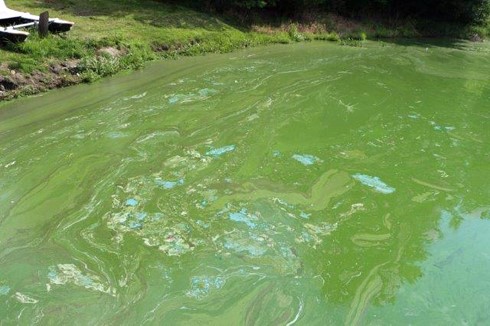
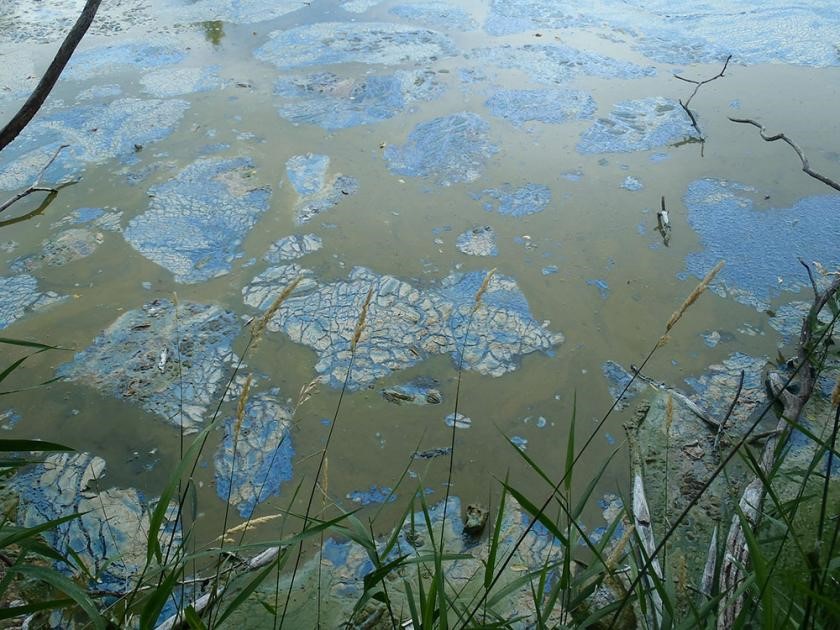
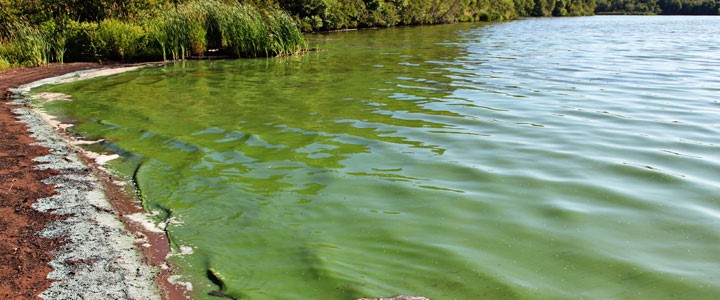
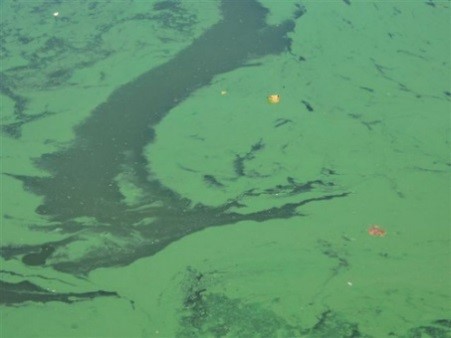
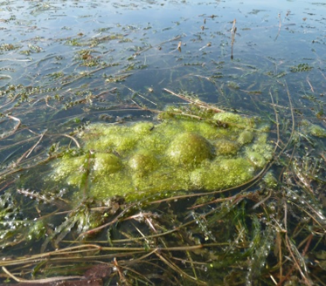
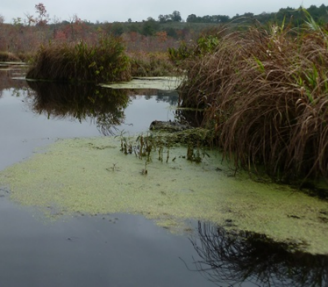
A harmful algae bloom (HAB) can be different colors. It may be blue-green, or plain green, yellow, brown, or red. It may have a scum on the water surface, or at the shore line. Large blooms often look unnatural—look like paint has been spilled into the water.
If you see something you think may be blue-green algae, tell the beach operator, staff or lifeguard. The Putnam County Department of Health should be notified at 845-808-1390 as well.
These are HABs
These are NOT HABs
About HABs
About Blue Green Algae
Blue-green algae is the popular name for a group of tiny, single-celled organisms, or cyanobacteria. They occur naturally in lakes, streams, and oceans. Some blue-green algae produce toxins. Under certain conditions, blue-green algae can grow rapidly and cause a harmful “bloom,” which discolors the water or produces floating scums.
A harmful algae bloom (HAB) can cause health effects in people and animals. This may happen when a person’s skin touches the algae bloom, or when water is swallowed or droplets are inhaled. These blooms can also be a major hazard to drinking water supplies.
Protect your family from HABs
If you see an algal bloom, do not go in the water. Keep children and pets out of the water. This includes waterskiing and other recreational water sports because contaminated spray and droplets can be inhaled and cause problems. If you or your pets do go in water that has an algal bloom, wash yourself or your pets off immediately afterwards with tap water.
Do not use untreated lake water for drinking, brushing teeth, cooking, and bathing. Boiling the water will NOT kill the toxins produced by the blue-green algae. Instead it can actually elevate the toxin levels.
HABs can appear suddenly and without warning. Obey all beach closure signs at your local beach. The NYS Department of Environmental Conservation also updates a list of HAB notifications in the state on a weekly basis and in an archive
Your pets are at risk
Dogs also swallow more water than humans while swimming and playing. Dogs are not bothered by water that looks bad or smells and will go in contaminated water.
Toll free (TTY) for the Deaf, Hard of Hearing, and Speech Impaired
Dial 7-1-1 or 800-662-1220
Email
This email address is being protected from spambots. You need JavaScript enabled to view it.
In the event of an emergency, Health Department staff are available 24/7. Please call 845-808-1390 to report a public health emergency, rabies exposure, communicable disease, water outage or sewer overflow.
If you are a member of the media and would like to contact the health department, please email This email address is being protected from spambots. You need JavaScript enabled to view it..
The Putnam County Department of Health is made of several divisions all working towards improving and protecting the health of the entire community, through the lens of equity.
Department of Health staff assess the health of Putnam County to develop and coordinate health promotion campaigns and programs tailored to the needs of the community. This includes planning for emergencies, creating linkages to care, analyzing health related data collected from the community, and providing timely and accurate information to residents. A variety of assessments are conducted to capture the full picture of the health in Putnam County.
Community Health Assessment and Community Health Improvement Plan
March 25 at 7 p.m. at the Patterson town board meeting
April 15 at 6 p.m. at the Putnam Valley town board meeting
More dates will be added to this list as they are scheduled...check back soon!
A Community Health Assessment (CHA) is conducted every three years in each county in New York State. A Community Health Improvement Plan (CHIP) is developed from the CHA along with input from various community partner organizations with direction from the New York State Prevention Agenda. Public Health Summits have been held in the past to inform planning and priority focus areas. Progress reports on priority areas are shared with New York State annually.
For archived surveys, please complete this form and when describing data requested, indicate which topic and the time period you are interested in.
If you have additional questions or accessibility needs for the above documents, please contact 845-808-1390.
County Health Rankings
County Health Rankingsare released annually by the Robert Wood Johnson Foundation and the University of Wisconsin Population Health Institute. Health outcomes and factors are measured across the United States. Putnam County consistently tops the list of healthiest counties in New York. Click here for more information or to view the most current health rankings.
Certain diseases are tracked and analyzed to help inform healthcare provider decision making. Click here to view the respiratory virus surveillance dashboard.
Can't find what you are looking for?
To request local health data not found here, please complete this form.
Emergency Preparedness
The Putnam County Department of Health plays a vital role in emergency preparedness. Health department staff plan for a variety of public health emergencies and perform drills to refine the response. Planning is coordinated with wide-ranging community partners, all with an interest in keeping residents and organizations safe and healthy. Following a public health emergency or event, health department staff are called upon to participate in a coordinated response. Preparing for public health emergencies builds resiliency and helps to protect residents from disease outbreaks and other hazards due to contaminated food and water, chemical releases, natural disasters, unmet medical needs and biological events.
Make a Plan
Be prepared by making a plan before an emergency:
Start by having a discussion with your family, friends, or household. Talk about how you plan to receive emergency alerts or warnings, your shelter plans, your evacuation route and your emergency kit.
Consider specific needs in your household. Tailor your plan to specific daily living needs of your family. Consider special needs, responsibilities, pets, children, disabilities, and languages spoken.
Start your kit by gathering food, water, and other supplies to last several days. Your kit should be one or two easy to carry containers like plastic bins. Store your kit in a cool, dry place. Rethink your needs each year and make sure to replace expired food.
Basic supplies include:
Water: 1 gal/person per day
Food: 3 day supply of non-perishables
Battery or hand crank radio
Flashlight
First Aid Kit
Extra Batteries
Fire extinguisher
Can opener
Extra supplies may include:
Hand sanitizer
Disinfecting wipes
Prescription and non-prescription medications
Infant formula, bottles, diapers and wipes
Pet food
Other items to include in your emergency kit can be found at www.ready.gov/kit.
Stay Informed
Familiarize yourself with the kinds of emergencies or disasters that might occur in your area. In Putnam County, it is usually extreme weather like tropical storms, tornadoes, or a nor’easter.
Before, during, and after an emergency, following directions from local authorities can keep you safe. Stay informed by signing up for New York Alerts at alert.ny.gov.
Join the Medical Reserve Corps
The Putnam County Medical Reserve Corps (MRC) recruits and trains volunteers to support the county in the event of an emergency or disaster. Their mission is to serve the community by strengthening public health, improving emergency response capabilities and building community resiliency. The Putnam County MRC is one of nearly 1,000 MRCs nationwide that organize locally.
The Putnam County Department of Health uses a variety of ways to share health related information. From traditional print media to online news outlets and social media, the health department shares timely and pertinent health information with residents. Additionally, information is frequently provided to community organizations, healthcare providers, permitted facilities, and other businesses that intersect with public health.
If you are a member of the media and would like to contact the health department, please emailThis email address is being protected from spambots. You need JavaScript enabled to view it..
To request a presentation/ guest speaker from the health department our attendance at an informational booth/ table, please complete this form.
Contact Us
Phone
845-808-1390
Fax
845-278-7921
Fax (Nursing)
845-447-9490
Toll free (TTY) for the Deaf, Hard of Hearing, and Speech Impaired
Complaints on facilities will not be addressed through email. To file a complaint, please call the Department of Health directly at 1-845-808-1390.
Animal bite reports should be emailed to This email address is being protected from spambots. You need JavaScript enabled to view it.
In the event of an emergency, Health Department staff are available 24/7. Please call 845-808-1390 to report a public health emergency, rabies exposure, communicable disease, water outage or sewer overflow.
If you are a member of the media and would like to contact the health department, please email This email address is being protected from spambots. You need JavaScript enabled to view it..